
Unlock Oil & Gas Opportunities
Discover exciting opportunities in the oil and gas sector with SIEPX Europe. We maintain strong connections at the C-level across various regions, ensuring access to high-quality products like JET A1 and EN590. Our commitment to a solid and transparent process safeguards both buyers and sellers, fostering trust and reliability in every transaction.
At SIEPX Europe, we understand the complexities of the market and strive to streamline your experience. Our experienced team is dedicated to providing tailored solutions that meet your specific needs.
Ready to take the next step? Let us help you navigate the oil and gas landscape with confidence. Contact us today to explore how we can support your business objectives!
Unlocking Opportunities in Oil & Gas
Welcome to SIEPX Europe, your trusted partner in navigating the dynamic and complex landscape of the global oil and gas industry. With offices strategically located in Brazil, the USA, and Europe, we are well-positioned to capitalize on the growing demand for refined petroleum products, particularly JET A1 and EN590.
In today’s global market, securing high-quality fuel products is not just a necessity but a competitive advantage. JET A1, essential for aviation, plays a critical role in supporting airlines as they meet the rising demands of the travel sector. Likewise, EN590, the international standard for diesel fuel, remains indispensable for transportation and industrial operations. At SIEPX Europe, we harness our deep expertise and industry knowledge to ensure the supply of these vital commodities, meeting the diverse and evolving needs of our clients across various regions.
We facilitate the trade of these essential products by connecting buyers with the right sellers, ensuring mutually beneficial relationships. Our extensive network enables us to identify and match qualified buyers with reputable suppliers, streamlining the procurement process and enhancing market access.
To maintain the highest standards of compliance and integrity, we exclusively source and trade non-sanctioned products. Furthermore, for every transaction, we require that the financial institutions involved must be among the Top 25 international banks. This ensures secure, transparent, and efficient processing, aligning with the rigorous standards of today’s global trade environment.
For your inquiries to be considered, it is imperative that clients submit all relevant forms in full, ensuring all required information is provided. This allows us to proceed with precision and efficiency, facilitating a seamless transaction process.
At SIEPX Europe, we pride ourselves not only on delivering premium products but also on fostering long-term strategic partnerships built on trust, growth, and innovation. Whether you are looking to optimize your fuel supply chain or explore new opportunities in the oil and gas sector, we are here to support you with competitive pricing, reliable supply, and unparalleled market insights.
Are you ready to take the next step? Contact us today, and let us guide you through the complexities of the oil and gas market with confidence. Your next opportunity is just a conversation away.
The Products
JET A1 - Jet Fuel

Jet A-1 is a type of aviation kerosene developed especially for aircraft with jet engines. It is transparent and produced according to international specifications, being the most common unleaded or paraffin fuel. Here are some key features:
Physical Characteristics
- Appearance: Clear and clear liquid, free of water and suspended materials.
- Density: Approximately 0.804 kg/L.
- Flash point: 40°C.
- Chemical Properties
- Risk class: Flammable liquid (Class 3).
- UN Number: 1863.
- Incompatibilities: Incompatible with explosives and organic peroxides.
- Risks and Security
- Flammability: Flammable product in the presence of a source of ignition or heating. The containers can explode from the heat of the fire.
- Health: May irritate the skin, eyes, and respiratory tract. Prolonged inhalation can cause headache, nausea, visual hallucinations, drunkenness, and loss of consciousness.
- Environment: Contaminates watercourses, making them unfit for use and can destroy local fauna and flora.
Precautions
- Handling: Use personal protective equipment (PPE) such as gloves, goggles and a respiratory mask.
- Storage: Keep away from heat sources, sparks and open flames.
Use
- Application: Mainly used as fuel for aviation turbine engines.
Physical and Chemical Characteristics
- Density: Approximately 0.804 kg/L.
- Flash point: 38°C.
- Freezing point: -47°C.
- Autoignition temperature: 210°C.
- Additives: Includes antioxidants, antistatic agents, corrosion inhibitors, and biocides.
Applications
The Jet A-1 is widely used in turbine engines of commercial and military aircraft, including airplanes and helicopters2. It is essential for aviation due to its high energy efficiency and stability in various weather conditions.
Negotiation
The Jet A-1 is traded globally as a commodity, with prices influenced by factors such as the price of crude oil, refining costs, demand from the aviation sector, and geopolitical conditions. It is usually sold in large volumes to airlines and airport operators.
World’s largest producer
The largest producers of Jet A-1 are major oil and gas companies such as ExxonMobil, Shell and BP. Production is concentrated in regions with large oil refineries, such as the United States, the Middle East and Russia.
EN590 - Diesel
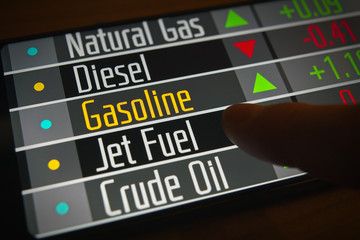
EN590 is a European standard that defines the physical and chemical properties that all automotive diesel fuel must meet in order to be sold in the European Union and some other European countries. This standard allows the blending of up to 7% biodiesel (fatty acid methyl ester) with conventional diesel.
Physical and Chemical Characteristics
– Density at 15°C: 820-845 kg/m³.
– Cetane number: Minimum of 51.
– Sulphur content: Maximum 10 mg/kg (ultra-low sulphur diesel).
– Flash point: Above 55°C.
– Viscosity at 40°C: 2.00-4.50 mm²/s.
– Polycyclic aromatic hydrocarbon content: Maximum 11%.
Applications
EN590 is primarily used as diesel fuel in road vehicles, including cars, trucks, and buses. It is also used in off-road engines, such as in agricultural and construction equipment.
Negotiation
EN590 diesel is traded as a global commodity, with prices influenced by factors such as the price of crude oil, refining costs, demand from the transportation sector, and geopolitical conditions. It is sold in large volumes to fuel distributors, gas stations and large industrial consumers.
World’s largest producer
The largest producers of EN590 diesel are major oil and gas companies such as ExxonMobil, Shell and BP. Production is concentrated in regions with large oil refineries, such as the United States, the Middle East and Russia.
Professional Fuel Request Formulary for Refineries
The Producers we trust
The best way to align with nature is to implement sustainable energy practices.
In an era where climate change poses significant challenges, aligning with nature is more crucial than ever. Implementing sustainable energy practices is not only a responsible choice but also a pathway to a more harmonious relationship with our planet. By transitioning from fossil fuels to renewable energy sources such as solar, wind, and hydroelectric power, we can significantly reduce our carbon footprint and mitigate environmental degradation.
Sustainable energy practices encompass energy efficiency, conservation, and the use of clean technologies. By investing in energy-efficient appliances, improving building designs, and embracing smart technologies, we can reduce energy consumption while maintaining comfort and productivity. Additionally, supporting local and renewable energy projects fosters economic growth and job creation, all while preserving the environment.
Moreover, adopting sustainable practices encourages innovation. As industries pivot toward greener solutions, they drive technological advancements that benefit not only the environment but also society as a whole. From electric vehicles to smart grids, these innovations create a more resilient and sustainable future.
Ultimately, aligning with nature through sustainable energy practices allows us to safeguard our ecosystems for future generations. By making conscious choices today, we pave the way for a cleaner, healthier planet. It’s time for individuals, businesses, and governments to collaborate in this transition, recognizing that our well-being is intrinsically linked to the health of our environment. Together, we can create a sustainable future that respects and nurtures our natural world.

The Procedures we believe are fair for both sides
WIN-WIN MENTALITY WE BELIEVE IN
International Fuel Trade: Procedures and Security in TTT and TTV Negotiations
The international trade of fuels such as Diesel and Jet Fuel involves a series of rigorously controlled steps to ensure a secure, efficient, and balanced process for both the buyer and the seller. The most commonly used negotiation modalities, TTT (tank-to-tank) and TTV (tank-to-vessel), are favored due to their flexibility and ability to meet diverse logistical needs.
TTT (Tank-to-Tank) Modality
In a TTT negotiation, the product is transferred directly from one storage tank to another. This type of operation is ideal for buyers who already have storage facilities in strategic locations. The main benefits of this modality include:
– Reduction in transportation and handling costs;
– Greater control over volumes and product quality at the point of delivery;
– Product traceability from origin to the final destination.
TTV (Tank-to-Vessel) Modality
TTV negotiation involves transferring the fuel directly from a storage tank to a vessel, enabling the product to be exported or shipped to international markets. This modality is particularly suitable for large volumes and buyers requiring logistical solutions involving maritime transport. The key benefits include:
– Flexibility in international transport;
– Increased efficiency in moving large fuel volumes;
– Mitigation of operational risks associated with road or rail transport.
Balance and Security in Negotiations
In both TTT and TTV modalities, the balance between buyer and seller is ensured through secure and transparent commercial practices. The procedures include:
– Agreement on Terms: Both parties must agree on the contract terms, which clearly specify the volume, quality, price, and delivery timelines of the product.
– Inspection and Certification: Before the transfer of ownership, the product is inspected by an independent certification entity. This ensures that the fuel meets the quality requirements established in the contract.
– Bank Guarantees: To ensure the financial protection of both parties, financial instruments such as Letters of Credit (L/C) or bank guarantees may be employed, offering an additional layer of security in the payment process.
– Logistics Procedures: Logistical procedures are planned to ensure the safe and timely delivery of the product, with constant monitoring of each stage of transport.
These mechanisms ensure that negotiations are fair and secure, minimizing risks and fostering mutual confidence between buyer and seller. Ultimately, the success of a fuel transaction depends on the clarity of agreed terms and the rigorous execution of the defined procedures.
TTT (Tank-to-tank) PROCEDURES and COMMENTS;
PROCEDURE TANK TO TANK
1. Buyer issues ICPO and Company Registration Certificate or any I.D. With TSA for seller’s approval.
2. Seller issues Draft Commercial Invoice, Buyer signs and returns to Seller.
3. Seller presents product SGS Report to Buyer’s Tank farm only to verify and confirm product specification, upon confirmation of SGS report by Buyer tank farm storage company, Seller lease and pays the buyer’s tank for 3 days and Buyer do pay his Tank Farm Company for 3 days as well alongside the buyer for buyers tank farm to confirm both payments.
4. Seller presents Injection Schedule program to Buyer/Buyer tanks farm to co-sign to enable the issuance of the POP documents listed below.
5. Seller provides buyer with FULL POP Documents:
A. Fresh SGS Report less than 48 hours
B. Dip Test Authorization-Unconditional
C. Injection Report
D. Tank Storage Receipt with GPS Coordinates
E. Tank Farm Bar-code Information
F. Letter of Commitment to Supply
G. Registration Certificate & Export License Copy
H. Authority to Sell & Collect (ATSC)
I. Endorsed Injection Schedule by the buyer & buyer Tank Farm
J. ATV – For Physical Verification
K. Irrevocable Commitment to Supply for Spot and 12 months Contract Injection Schedule signed by buyer & buyer’s tank farm
6. Buyer conducts Dip-Test in seller’s tank, via SGS on buyer’s cost, seller injects the fuel into buyer’s tank and Buyer makes payment based on Q&Q by MT103 wire transfer / TT according to the final Commercial Invoice.
7. Seller transfers the title of ownership as per Buyer’s instruction. Buyer lifts the product.
8. Seller pays all intermediaries of Seller side involved in the transaction and subsequently monthly contract shipment continues as per terms and conditions of the sales and purchase agreement contract between buyer and seller.
COMMENTS FOR YOUR REFERENCE;
These procedures outlined in the “Tank-to-Tank” process are designed to ensure safety and fairness for both the buyer and seller. Let’s break down why each step contributes to a secure transaction:
1. Buyer issues ICPO and Company Registration Certificate or I.D. (With TSA for seller’s approval):
– Why it’s safe: This initial step ensures that the buyer is verified and that the seller can conduct due diligence, ensuring the buyer’s legitimacy before proceeding. TSA (Transaction Security Agreement) further adds a layer of trust by protecting the transaction from fraudulent activities.
2. Seller issues Draft Commercial Invoice:
– Why it’s safe: The draft invoice lays out the terms and details of the sale before any commitments are made. This allows both parties to review and agree to the terms transparently, avoiding misunderstandings.
3. SGS Report and Buyer Tank Farm Payment:
– Why it’s safe: The seller provides an SGS report to verify the product’s specifications. This ensures the buyer that the product meets agreed-upon standards before leasing tank space. Both parties make payments for tank leasing simultaneously, ensuring mutual commitment and reducing financial risks.
4. Co-signing the Injection Schedule:
– Why it’s safe: Both the buyer and seller must agree on the schedule and co-sign the document. This step ensures that both parties are aligned on timelines and that the necessary preparations are in place for the transfer.
5. Seller provides FULL Proof of Product (POP) documents:
– Why it’s safe: The seller provides a comprehensive set of documents, including SGS reports, Dip Test Authorization, and Tank Storage Receipts, which verify the product’s quality, storage conditions, and other important details. This offers transparency and reassurance to the buyer that the product is ready and as described.
6. Buyer conducts Dip-Test in seller’s tank, seller injects fuel into buyer’s tank, and buyer makes payment:
– Why it’s safe: The dip-test ensures that the fuel quantity and quality meet agreed-upon standards before the buyer makes payment. This prevents the buyer from paying for substandard or incorrect quantities of fuel. The payment via MT103 wire transfer, which is a secure bank payment method, adds an additional layer of financial protection for both parties.
7. Transfer of ownership as per buyer’s instruction:
– Why it’s safe: The seller does not transfer ownership until the buyer confirms and instructs it, ensuring that the buyer has control over the final steps. This protects the buyer from taking ownership prematurely or without being satisfied with the product.
8. Seller pays intermediaries and shipment continues as per contract:
– Why it’s safe: Paying intermediaries is important for ensuring that all parties involved in the transaction are compensated, reducing potential disputes. Clear contractual terms also ensure that future shipments continue according to the original agreement, creating a long-term, stable relationship.
Conclusion:
– For the buyer: The procedures offer layers of verification (SGS report, dip-test, co-signed documents) that ensure the product’s quality, quantity, and delivery process before payment and ownership transfer. This minimizes the risk of fraud or receiving substandard products.
– For the seller: Payment security is ensured by the use of MT103 wire transfers, and the buyer’s commitment is confirmed early on by their ICPO and payment for tank leasing. The seller also holds control over the title transfer until the payment process is completed.
By following these steps, both the buyer and seller are protected through transparent documentation, mutual financial commitments, and third-party verification (SGS, Dip Test), making the transaction secure and reducing the risk of disputes.